

Do you find the car loan approval process puzzling or intimidating? Wondering if you can fast-track your journey to drive off the dealership lot in your dream vehicle? Let’s break the myth – the path to apply for a car loan and acquire auto finance need not be a tiring, drawn-out ordeal! This guide is designed to coach you through the maze to obtaining your vehicle loan promptly and painlessly. Stay tuned as we dispel common misconceptions, answer pivotal questions, and reveal efficient strategies to ease your car finance venture. Who knows? You might just end up making a smarter, well-informed decision that perfectly suits your financial stability and preferences.
Key Takeaways
- Unravel the intricacies of the car loan approval process.
- Discover how to apply for a car loan without the typical hassle.
- Learn the essentials about auto financing and how to secure it fast.
- Understand the crucial role of credit scores in vehicle loan decisions.
- Explore essential strategies for quick and favorable car finance approval.
Understanding Your Credit Score and Report
When it comes to obtaining an auto loan, your credit score and report play a crucial role. They help lenders to gauge your creditworthiness and determine the car loan rates you qualify for. Therefore, understanding your credit status, reviewing your report, and resolving any inaccuracies before seeking an auto loan cannot be understated.
Why Credit Matters for Auto Financing
Your credit score, a numerical representation of your credit history, is a pivotal factor when applying for an auto loan. Lenders view it as an indicator of your ability to repay the loan. A high credit score could unlock favorable terms and lower interest rates, making your dream car more affordable. Moreover, some lender-specific scoring models might prioritize your past dealings with auto loans, making it worthwhile to understand how different financial institutions evaluate your credit score.
How to Obtain and Review Your Credit Report
- Obtain your report: Access your credit report for free through AnnualCreditReport.com. You can view your report weekly from three major credit bureaus, enabling you to stay updated with your credit status.
- Examine the report: Scrutinize your credit report carefully to understand the details it contains. It outlines your financial obligations and how well you’ve managed them, all of which impact your credit score.
Addressing Errors on Your Credit Report
Finally, it’s crucial to ensure accurate credit reporting. Mistakes such as erroneous late payments or fraudulent transactions can significantly hurt your credit score. If you find any discrepancies, don’t hesitate to dispute them. By cleaning up your credit report, you stand a better chance of securing an auto loan with desirable rates.
| Steps to Address Credit Report Errors |
|---|
| 1. Identify and highlight inaccuracies in the report. |
| 2. Gather proof to support your discrepancy claim. |
| 3. Contact the credit bureau and the lender that reported the error. |
| 4. Begin the dispute process and follow up until the issue is resolved. |
With a clear understanding of your credit score and report, you are well-equipped to start the auto loan application process. Along with the aid of a car loan calculator, this knowledge can guide you through selecting the most beneficial loan rates available.
Exploring Car Loan Rates and Terms
As you embark on your journey to secure a new or used car loan, understanding the impact of credit scores on interest rates and loan terms is critical. Arm yourself with this knowledge to identify the best car loan options in line with your financial situation.
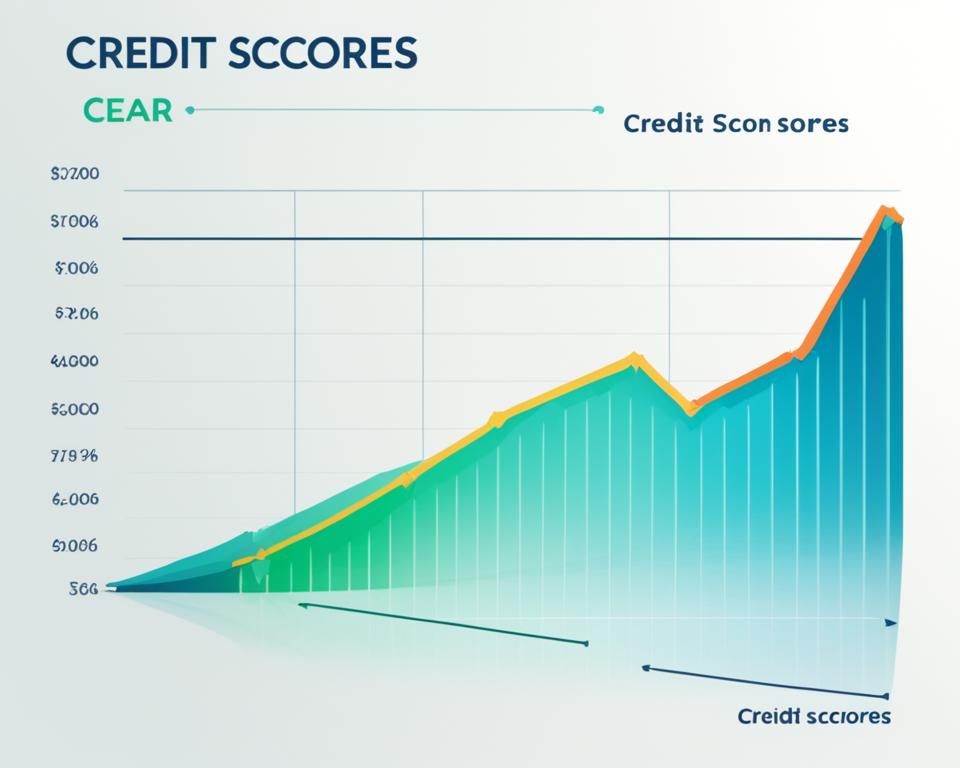
Comparing Average Car Loan Rates by Credit Score
Your credit score wields significant influence over the terms and rates offered when exploring car loan rates. Although average interest rates serve as a handy benchmark, individual credit histories and other personal factors ultimately define the final rates.
| Credit Score Range | Average APR for New Car Loan | Average APR for Used Car Loan |
|---|---|---|
| 720-850 | 3.65% | 4.29% |
| 690-719 | 4.68% | 6.04% |
| 660-689 | 7.65% | 11.26% |
| 620-659 | 11.92% | 17.74% |
| 590-619 | 18.39% | 23.63% |
| 500-589 | 18.98% | 25.31% |
Understanding the Impact of Loan Terms on Payments
One other essential aspect to consider is how varying loan terms impact monthly payments and the total interest paid over the loan’s life. Factors such as the duration of the loan and the amount financed significantly affect these figures. Gaining this insight will enable you to make informed decisions about your car loan options and single out the best car loan rates suited to your professional and personal circumstances.
- Shorter loan term: Lower total interest but higher monthly payments
- Longer loan term: Lower monthly payments but higher total interest
Navigating Lender Options for Car Loans
In the realm of auto financing, the range of options available can be overwhelming. Whether you are considering banks, credit unions, online platforms, or dealerships, each offers unique advantages and potential challenges when it comes to vehicle financing and car loan approval. Finding the lender that best suits your needs is crucial in securing a low interest car loan and the ideal car loan options for your specific situation. As we delve into this topic, let’s remember that each choice may be the right for one person, and not necessarily the best for another.
Differences Between Banks, Credit Unions, and Online Lenders
Conventional banks and credit unions bring with them a sense of familiarity and trust. They often offer competitive rates to members or account holders and are able to provide personalized service to those who walk into their branches. However, physical banks and credit unions may also have more stringent loan approval criteria compared to other options.
On the other hand, online lenders propel attractiveness through sheer convenience. Their ability to streamline the application process right from your laptop or mobile device tends to be an appealing feature for many. However, they commonly lack face-to-face customer service, which some borrowers find valuable.
Understanding the differences between these types of lenders is the first step down the path of auto financing.
The Pros and Cons of Dealership Financing
Dealership financing is another route to explore when seeking auto financing. They offer unique promotions and partnerships with local banks, potentially landing you more favorable rates. The caveat? Dealership financing often tags along with dealership fees that could offset those attractive interest rates.
When navigating the labyrinth of car loans, considering all of these factors is vital to securing a loan that aligns with not only your car dreams but also your financial reality.
| Lender Type | Pros | Cons |
|---|---|---|
| Banks/Credit Unions | Trusted, clear rates, possibly lower for members/account holders | May have stricter loan approval criteria |
| Online Lenders | Convenient, streamlined process | Lack of physical branches, limited in-person service |
| Dealership Financing | Possible promotional rates, partnerships with local banks | Dealership fees may offset lower interest rates |
In conclusion, understanding and evaluating all your auto financing and car loan approval options—and their pros and cons—is essential to securing the best possible deal. Remain patient, do your homework, and you’ll be well-equipped to navigate the vehicle financing landscape, resulting in a successful car loan approval at a low interest rate.
The Preapproval Advantage in Auto Financing
In the quest for a favourable car loan approval, obtaining preapproval emerges as a significant boon. To the unacquainted, preapproval might sound similar to prequalification, but there’s a nuanced difference that holds a potential goldmine of advantages.

Prequalification gives an estimated projection of loan amount and car loan rates based on a soft credit check. Preapproval, on the other hand, entails a comprehensive evaluation of your credit and finances. This elaborate assessment yields a more accurate indication of the loan amount and the interest rate you can command, painting a truer picture of your auto financing potential.
Preapproval calls for a hard credit inquiry and thus, provides a firm commitment from the lender, offering a sense of dependability and predictability.
This process gives borrowers a stronger footing in negotiations with sellers, facilitating a more focused and budget-conscious vehicle purchase approach. Let’s not forget, with a preapproved auto loan, you can enjoy the power of certainty and avoid the tense ambivalence usually associated with loan pursuits.
- Preapproval provides a clear understanding of your budget so you know exactly what you can afford.
- Approaching dealerships with a preapproved loan equips you with greater negotiating prowess.
- It streamlines the vehicle buying process, cutting down on time and stress.
- Preapproval locks in favorable car loan rates, enabling better financial planning.
Whether you’re a first-time buyer or an auto financing veteran, opting for a preapproval could make a significant difference in your vehicle financing journey, setting the tone for an improved auto loan experience.
Setting a Realistic Budget for Your Vehicle Purchase
Embarking on your journey to vehicle ownership can be a thrilling yet daunting experience. A paramount step towards a smooth and financially sound vehicle purchase is setting a realistic budget. This budget is not just about the vehicle’s sticker price but also associated expenses like insurance, maintenance, and fuel. Knowing where you stand early in the process can help you set expectations, avoid financial stress, and heighten your chances for car loan approval.
Using Auto Loan Calculators to Estimate Payments
Tools like auto loan calculators and car loan calculators can be indispensable allies when strategizing your vehicle finance. These calculators can help you understand what your monthly payments might look like by factoring in various parameters such as the loan amount, interest rate, loan term, and down payment.
Effectively using these calculators can provide you a snapshot of potential loan scenarios. Below is an illustration of how various loan terms could impact your monthly payment and overall cost:
| Loan Term | Interest Rate (%) | Monthly Payment ($) | Total Cost ($) |
|---|---|---|---|
| 3 Years | 3.5 | 882 | 31,752 |
| 5 Years | 3.5 | 545 | 32,700 |
| 7 Years | 3.7 | 414 | 34,788 |
This table assumes a loan amount of $26,000 at varying loan terms and interest rates. As it illustrates, the monthly payment decreases with a longer loan term, but the overall cost of the loan increases due to the accrued interest over an extended period. Making informed decisions based on the loan terms provided by your vehicle loan lender can prevent future financial predicaments.
How Down Payments Affect Your Loan
Besides loan term and interest rate, the size of your down payment is another vital element in your finance puzzle. A substantial down payment can significantly shift your loan structure to your advantage: reducing the monthly payment and overall interest cost, ultimately increasing the likelihood of car loan approval.
It’s wise for prospective buyers to strike a balance that allows them to comfortably put a larger down payment while still maintaining sufficient cash reserves for other potential costs.
To encapsulate, while setting your vehicle purchase budget, it is not only imperative to consider the upfront cost of your dream vehicle but also the ensuing spendings. Embrace tools like auto loan calculators and consciously decide on your down payment to advance on a path towards hassle-free vehicle ownership and financial wellness.
Finding the Right Car Within Your Budget
Choosing the right car within your budget constraints is far easier said than done. Simple factors such as personal preferences and financial limits combine to make this decision a nuanced one. Between new car loan options and used car loan choices, different financial implications come into place. These need to be thoroughly considered alongside your budget before coming to a decision.
Assessing New versus Used Car Loan Options
Acquiring a new car typically involves higher purchase prices which consequently result in higher loans. Conversely, choosing to finance a used car generally means lower costs due to the vehicle’s depreciated value.
- New Car Loans: These loans may come with higher interest rates, but they also provide the opportunity to own a brand-new vehicle. With no previous usage or damage issues to worry about, new car loans can be the best car loan option for those prioritizing longevity and reliability.
- Used Car Loans: These loans tend to be smaller due to the lower costs associated with used vehicles. With the right vehicle financing plan, you might find a great deal for a high-quality pre-owned car.
Though different, each type of car finance offers its own set of advantages and can be the ideal choice depending on your personal circumstances and needs.
Tips for Negotiating the Best Price
Securing the best car loan is not just about selecting the right type of loan. Effective negotiation tactics with dealerships or private sellers also play a crucial role. Shrewd negotiation can help cut back on purchase prices and lead to more favorable vehicle financing conditions by reducing the total loan amount.
While negotiating, it’s important to remember that some loan offers may impose certain restrictions. These can include exclusive dealership requirements or excluded car brands. Knowing such criteria beforehand helps prevent any last-minute surprises and increases your chances of getting the best price possible.
To summarize, understanding new car loan and used car loan options is key to securing the best car finance deal. Pairing this understanding with effective negotiation techniques helps aim for the best price, ensuring that you find the right car within your budget while maintaining favorable vehicle financing conditions.
Finalizing the Car Loan Application Process
A successful journey through the car loan application process requires careful preparation and a keen eye for details. Getting your documents sorted and understanding the aftermath of your application – whether that’s a vehicle loan approval or denial – are critical steps towards securing your dream car. Compiled below are key elements to consider during this phase:
Gathering Necessary Documentation for Loan Approval
To make your application for auto loan approval as smooth as possible, there’s an array of necessary documentation you must provide. Let’s go through this list:
-
Proof of Income:
This could be recent pay stubs, tax returns, or even a letter from your employer.
-
Proof of Residence:
A utility bill usually suffices.
-
Proof of Insurance:
Comprehensive and collision auto insurance is obligatory when financing a car
Steps to Take After Receiving Loan Approval or Denial
Once you’ve submitted your car loan application, the response you get from your lender can take either of two main routes. Here’s what to do in each scenario:
- Loan Approval
- If you’re approved, make sure to review your loan contract and understand all terms and conditions before signing anything.
- Loan Denial
- In case of a denial, don’t despair. Look into the reasons why – this could be creditworthiness or a high debt-to-income ratio – and work towards improving those areas.
Remember, patience is crucial in the quest for car finance approval. With the right steps and documentation, you’re well on your way to driving that dream ride of yours.
Strategies for Achieving Low Interest Car Loans
For those on the journey towards vehicle financing, positioning oneself strategically for a low interest car loan can invigorate the car buying process. Imagine the potential for savings with favorable interest rates. This can manifest into reality with the right strategies, diligent financial preparation, and ensuring a seamless car loan approval.

Revamping your financial health can start with bolstering the credit score. A robust credit score not only casts a favorable impression but also significantly determines the car loan rates a potential borrower can secure. Regular timely payments, maintaining a low credit utilization rate, and promptly rectifying any errors in the credit report can contribute towards improving the overall credit health.
- Regular pay-offs
- Low credit utilization
- Immediate rectification of credit report errors
Moreover, shopping around for the best car loan rates can be a strategic move. A frequent comparison of updated interest rates and lender offerings, coupled with preapproval from various lenders, ensures an optimal approach towards securing a car loan with minimal financial strain. Here the key is knowledge and utilizing it to negotiate a deal that best aligns with your financial status and repayment capacity.
“The essence of strategy is choosing what not to do.” – Michael Porter
Another factor contributing to the appeal of your loan application can be a proven stable work history or satisfying minimum income standards. These elements reflect on your ability to shoulder the credit and might help in securing a low interest car loan. To recall:
| Strategy | How to Implement |
|---|---|
| Improving Credit Score | Regular payments, Low credit utilization, Correct errors |
| Shopping for Best Rates | Compare lenders, Look for preapprovals |
| Stable Work History | Maintain consistent employment |
| Meeting Minimum Income | Ensure your income crosses lender’s threshold |
In conclusion, the path to a low interest car loan and efficient auto finance entails a methodical approach, an understanding of the nitty-gritty of car loan approval, key emphasis on credit health, and the mindful choice of best car loan rates.
Overcoming Challenges with Bad Credit Car Loans
Personal credit scores can undoubtedly be a significant factor when it comes to securing your car loan. Navigating the terrain of bad credit car loans tends to be intricate, but it’s far from being an insurmountable hurdle. If your credit score is less than ideal, it’s vital to adapt strategically and utilize smart initiatives to boost your chances of approval. This task might sound daunting, but it is achievable through diligent planning and exploring a variety of available resources and options. Let’s delve deeper into how you can improve your chances with a less-than-perfect credit score.
Improving Your Credit Before Applying
When dealing with a bad credit score, a proactive, advantageous step can be to enhance your credit profile before you initiate the car loan application process. This improvement can be accomplished via several means. Consider committing to timely bill payment, reducing your overall debt, and diverting more funds into your savings to augment your down payment. Remember to regularly check your credit report, and promptly address any discrepancies or errors as they could be hindering your credit score. While improving your credit might seem time-consuming, it is a worthwhile endeavor that could unlock more favorable car loan rates and terms for you.
Exploring Options for High-Risk Borrowers
Your journey to successful auto financing doesn’t end with a low credit score. Numerous vehicle loan solutions cater specifically to what some lenders term ‘high-risk’ borrowers. For instance, consider exploring lenders who specialize in bad credit car loans. Such institutions have experience dealing with borrowers with varying credit scores and might be more inclined to approve your application.
Other alternatives include credit unions, which are known for offering more flexible loan terms and lower interest rates for their members. Some online lenders also cater to borrowers with poor credit scores, and their remote convenience works as an added advantage for applicants. When it comes to selecting the type and cost of the car, considering more cost-effective or used vehicles can also lower the required financing, making you a less risky prospect for lenders.
In conclusion, regardless of a poor credit score, having a strategic approach, remaining flexible, and exploring various car loan options can improve your chances of securing favorable auto financing. Keep in mind: your current credit situation is not your financial destiny. With patience and strategic planning, you can overcome the challenges of a bad credit car loan.
Conclusion
The journey towards swift car loan approval isn’t necessarily complicated, but it does require an informed and strategic approach. Whether you’re just starting to consider obtaining an auto loan or ready to face vehicle financing head-on, this comprehensive guide captures the critical elements you need to be aware of in applying for a car loan. So, let’s unravel the key takeaways and ascertain our readiness for future auto loan success.
Key Takeaways for Swift Car Loan Approval
From understanding your credit reports to wielding the power of a car loan calculator, you’re now equipped with the necessary tools to make your auto loan application process seamless. Leverage your newfound insights about various car loan options to negotiate favorable terms. Don’t forget the importance of strategic budgeting and compiling the necessary paperwork—after all, your preparedness in these areas can make or break your vehicle financing approval process.
Preparing for Future Auto Loan Success
As for your future auto finance endeavors, maintaining good credit health will play an instrumental role. Stay informed about market trends, including fluctuations in interest rates. Remember, early financial planning can sway the odds in your favor when you’re ready to apply for your next car loan. The world of vehicle financing is multifaceted, but with the right preparation and knowledge, you’re well on your way to unlocking the door to your dream car with confidence and ease.